
Bharatanatyam
Bharatanatyam is one of India’s oldest and most revered classical dance forms, with a history spanning over two thousand years. Originating in the temples of Tamil Nadu, it was traditionally performed by Devadasis as an offering of devotion to the Divine. The dance draws its foundation from the ancient Sanskrit treatise, the Natya Shastra, authored by the sage Bharata Muni, which codified the principles of dance, music, and drama.
Over the centuries, Bharatanatyam evolved from a sacred temple tradition into a globally celebrated classical art form. During the 20th century, visionary artists and scholars played a pivotal role in reviving and preserving the dance, ensuring that its rich heritage continues to inspire audiences around the world.
Importance of Bharatanatyam
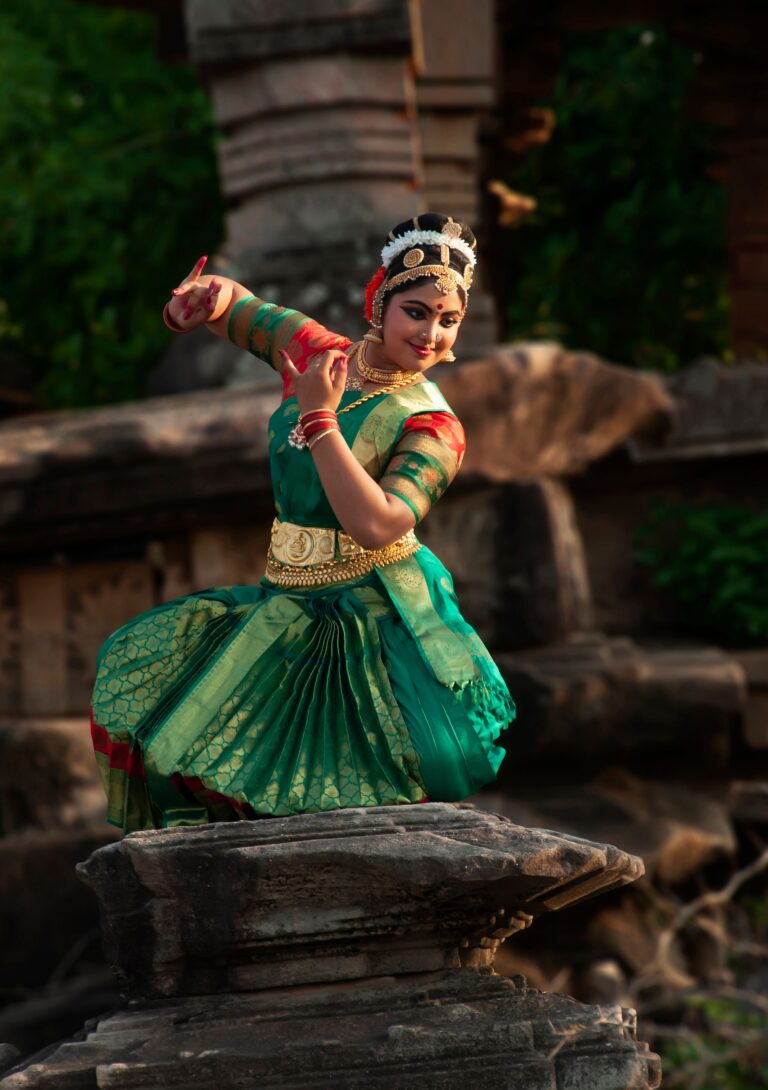
Bharatanatyam is much more than a performing art—it is a holistic discipline that nurtures the body, mind, and spirit. Through intricate footwork, expressive hand gestures (mudras), rhythmic patterns, and emotive storytelling (abhinaya), dancers develop physical strength, grace, concentration, discipline, and emotional intelligence.
The dance also serves as a powerful medium for storytelling, conveying timeless themes of devotion, morality, compassion, courage, and the triumph of good over evil. Each performance is an artistic expression that blends music, rhythm, literature, and spirituality into a unified experience.
Cultural Significance
Bharatanatyam is a living embodiment of India’s rich cultural and spiritual heritage. It preserves ancient traditions, mythology, classical literature, and philosophical values, passing them from one generation to the next through the universal language of movement.
Today, Bharatanatyam transcends geographical and cultural boundaries, uniting people across the world through a shared appreciation for Indian art and culture. It promotes cultural awareness, respect for tradition, and artistic excellence while fostering creativity, confidence, and self-expression among learners of all ages.